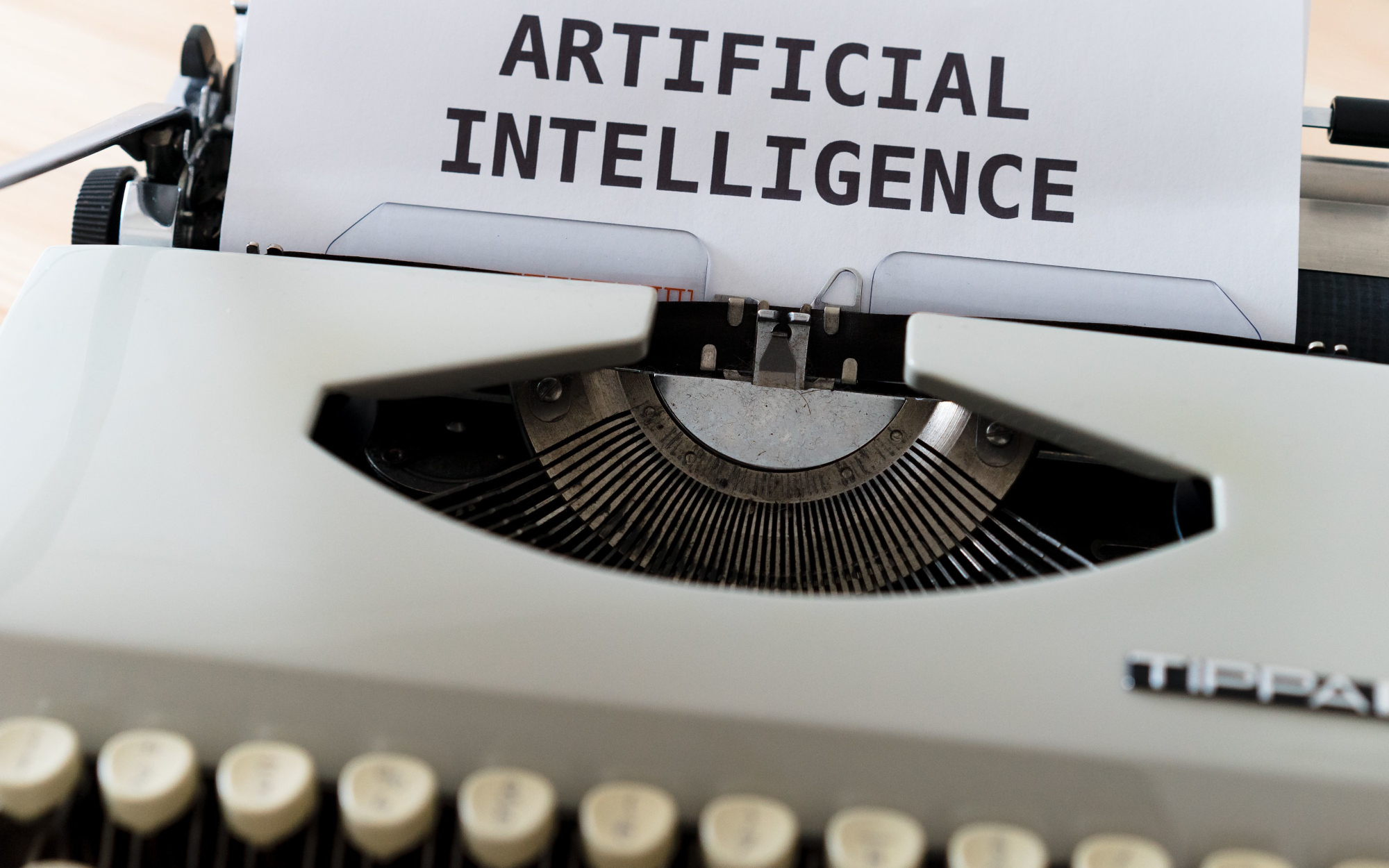
When it comes to publishing their book, many authors hit a wall—the dreaded book description.
They feel like the story is the important part, the cover is exciting, and the blurb is a nuisance that feels impossible to write.
Authors may be tempted to outsource the job to an LLM like ChatGPT. The problem with this is that an AI-generated book description could undermine your entire book and stop you from getting sales.
The reality is that LLMs are terrible for writing sales copy. Now, as an author and copywriter, I have plenty of reasons to be skeptical of generative AI and the risk it poses not only to my industry, but also to human creativity. I can also see where LLMs have their uses—but I firmly believe that book descriptions aren’t one of them.
None of this is to condemn anyone for using AI. I dislike when the conversation moves from practical argument (“You shouldn’t use AI because X”) to moral argument (“You’re a bad person if you use AI!”)
That being said, there are some real reasons why if you’re thinking of using LLMs for your book description, you might want to think again.
LLMs are the perfect average
Good marketing is about standing out as much as fitting in. If your book sounds like literally every other book on the market, readers’ eyes will glaze over, and they’ll just keep scrolling. An effective book description grabs attention, cutting through the noise. This is exactly why LLMs are bad at it.
I read a fascinating article by Write Arm not too long ago, where they talked about the problems with using LLMs for generating advertising copy. Because LLMs have been trained on vast amounts of human-written content, across all disciplines and fields, they’ve come to represent the perfect average.
They’re technically proficient, but they’re also safe, generic, and inoffensive.
“[W]hen you ask a chatbot to write you a marketing email, you’re not getting the sharpest, most specifically calibrated message possible. Instead you’re getting a weighted average of every marketing email ever written by everyone who left a trail on the web.” – Write Arm, Why LLMs aren’t good for marketing
Having tested AI models like ChatGPT with my own book descriptions, I find that this rings true. LLMs often spit out vague summaries that feel like they might be okay for a book description, but will actually fail to do the job a blurb needs to do—engage and convert readers.
This means that you can be left with a blurb that’s passable at first sight, but that won’t convince anybody to buy your book.
LLMs require experienced guidance
Another problem with authors using LLMs to generate marketing copy is that if you don’t know what you’re looking for, you can’t tell if the output is going to be any good.
Now, I’m not a programmer. I don’t know much about code. That’s why I wouldn’t trust AI to build me a website, because I wouldn’t be able to tell if the code was clean and efficient, or if it was a convoluted mess.
The same principle applies to book descriptions. You can feed your plot synopsis and chapter-by-chapter outline into an LLM, sure. But the AI model lacks judgment. It might highlight the wrong plot elements, misplace your genre, misrepresent your book, add unnecessary details, and bury what’s actually important about your story.
The old programming adage rings true: garbage in, garbage out. An LLM won’t be able to cut through your synopsis, filter out the key elements, find the right angle, and then use careful judgement and human psychology to craft the blurb.
The loss of creativity
Many authors oppose generative AI because of the way it threatens to replace human creativity and destroy the jobs of artists. This is why I find it odd that so many would turn to AI when it comes to their book description.
Having worked in copywriting for over 7 years, I can tell you first-hand that it’s an art form of its own. It blends creative expression, word choice, sentence rhythm, and emotional power with a deep understanding of human psychology and decision-making.
Having AI generate your book description may seem like a small, throwaway thing, but there’s little difference between that and using it to generate a book cover, or even your entire book.
I’ve also seen many readers go by the adage, “If a human didn’t write it, I’m not going to read it.” With the publishing landscape being as competitive and saturated with books as it is, do you want to risk needlessly turning away potential readers because they see an AI-generated book description and assume your entire story was also created that way?
I’m not the only one saying this
Author Chris Fox recently revealed on YouTube and in his blurb-writing book that out of a dozen authors he’s done consulting work for, every single AI-generated book description required serious work to get right.
Chris has sold millions of books, and I can say as a copywriter, he knows his stuff when it comes to blurbs. He’s not even anti-AI as a whole, so it’s not possible to accuse him of bias.
Consistently, AI has proven itself to be a useful generalist tool—but when it comes to marketing, the results are subpar.
So how should you write your book description?
Even though LLMs are a poor tool for book descriptions, there are still plenty of options for authors who want to give their book compelling sales copy that will attract the right readers.
The first path is to learn copywriting yourself. I know this can feel daunting and frustrating, which is exactly why I have a free blurb-writing book for authors, plus dozens of articles and guest posts on the art and science of book descriptions. In my book, I aim to walk you through the entire process, from blank page to finished blurb. I also highly recommend Bryan Cohen’s How to Write a Sizzling Synopsis.
Alternatively, if you’d rather focus on your writing and leave marketing to the experts, I offer done-for-you book descriptions. After writing thousands of blurbs for authors just like you, I can take your existing plot summary or blurb and craft a description that will make your book irresistible.
You’ve poured so much time, effort, and love into your book. Don’t slap a generic, AI-generated blurb on it at the last minute.
Not sure if your current blurb is working? Send it to me for a free review. I’ll take a look and give you a seasoned perspective.

Morgan Lee Clasper is a copywriter, book sales strategist, and author of The Blurb Puzzle. With over seven years of experience in the publishing industry, he’s worked with New York Times, Wall Street Journal, and USA Today bestselling authors, writing 4,000 blurbs and counting.

3 Ways to Write a Blurb for a Book Series or Box Set
Everyone loves a good book series or box set (whether that’s an anthology, collection, or omnibus). For readers, they can binge-read and lose themselves in thousands of pages for a very modest price. And for authors, publishing series and box sets are a great way to boost your royalties, sell more books, and benefit from…

3 Changes That Improved My “Dead” Book Sales By 1000%
After writing several fantasy books in 2020-2022, I took a few years off from writing to focus on my work, and I kind of forgot about them. While my Frostwing series continued to generate sales and page reads in the background, my newer series—with Dragon’s Mark as book 1—floundered. Sales dropped off, and it never…

The Worst Book Marketing Advice I've Ever Heard (and What To Do Instead)
Over the last 7+ years I’ve been in the self-publishing space, I’ve seen the whole gamut of advice. While a great deal of book marketing advice out there is sound wisdom, occasionally I see a recommendation (usually on a website like Reddit) that completely misses the mark and leaves me feeling for any author who…

I spent $150 on an ARC campaign. Here’s what happened.
Not too long ago, I came out of a writing hiatus and decided to write a spinoff novel for my biggest series. I’d heard plenty about ARC campaigns before, but I’d never really committed to testing one myself. For that reason, I decided to create a simple, small-scale experiment to gather some first-hand experience. While…

3 Ways to Market a Book That Fits in Multiple Genres
Picture this: You’ve finished writing your magnum opus. It’s a fantasy epic with romance, spaceships, and a murder mystery. Or, like one author I follow, you’ve written a supernatural archaeological thriller with pyramids and werewolves. But when it comes to publishing and marketing your book, you run into an issue: you have so many different…

Why Studying Bestselling Books Isn’t The Best Advice For Indie Authors
When writing your book description or gathering ideas for your book cover, it’s helpful to browse Amazon and look at what bestselling books in your genre are doing. This is particularly helpful for authors who are stuck on their book description. Taking inspiration from others is a great way to stimulate your creativity and give…
Sell more books with this free blurb-writing guide.
Learn the top copywriting secrets to create highly effective blurbs that will have your book flying off the shelves.

Leave a Reply